
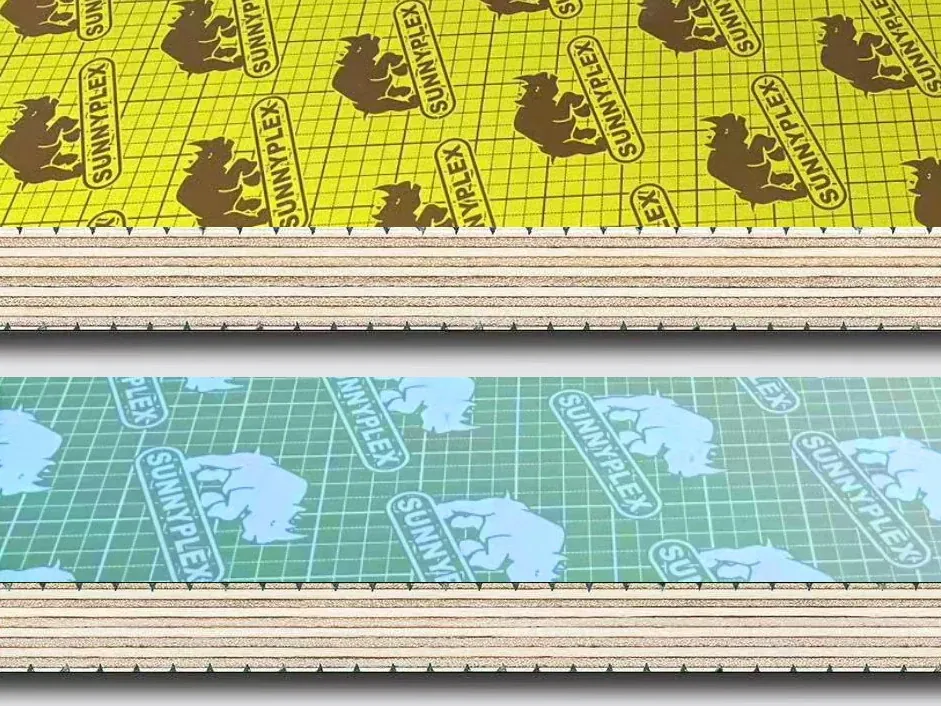
 Factory direct
PPmax TECH Plastic Plywood
0.5 mm PP (polypropylene) coated on both faces over a poplar, eucalyptus or birch plywood core, 8 – 21 mm — the everyday plastic faced panel, made for formwork that is stripped and re-used 30+ times.
- Thickness8 – 21 mm
- Panel sizeup to 1,550 × 3,050 mm
- CorePoplar / eucalyptus / birch
- GlueMelamine or phenolic
Made in our own factories in Pizhou, Jiangsu — no trading margin
Thickness, size, core, print and edge sealing produced to your order
20+ years exporting to Europe, the Middle East, Africa and the Americas
Why buyers specify this build
What the panel actually is, in the terms our customers ask about — construction, glue, grade and packing.
0.5 mm PP on both faces
Wear-resisting, corrosion-resisting polypropylene coated on both sides and bonded to the plywood core — either face can go to the concrete.
Yellow or green PP face
The coating comes in yellow or green, plain or printed with the buyer's own logo, marks and panel numbers straight off the press.
30+ re-use cycles
Where a normal film faced panel is good for one or two pours, the PP face keeps its surface through repeated stripping.
Acid and alkali resistant
Polypropylene shrugs off alkaline cement water, release agents and most site chemicals instead of staining or softening.
Bright concrete face
The smooth plastic surface leaves a clean, even wall and does not leave film marks or patches on the concrete.
Water and weatherproof
Edges are sealed against water, so panels can be stored outside between pours without swelling the core.
Recyclable plastic face
The PP layer is a single-material thermoplastic and the panel can go back into recycling at end of life.
Overview
PPmax TECH is the everyday panel of the plastic faced range. Both faces carry a 0.5 mm PP (polypropylene) coating bonded to a plywood core, so the surface the concrete touches is plastic rather than a phenolic film. There is no film edge to lift and no film to wear through.
Polypropylene is what gives the panel its working life: corrosion resistance, acid and alkali resistance and surface hardness. In practice that means the face survives alkaline cement water, release agents and site handling, stays bright after stripping, and can be turned over when one side is finally marked.
Because the surface is wear resistant, the panel is easy to re-use — the reusability figure for this build is more than 30 pour-and-strip cycles, against one or two for a normal film faced panel of the same core. We press it from 8 to 21 mm thick, up to 1,550 × 3,050 mm, on poplar, eucalyptus or birch cores with melamine or phenolic (WBP) glue — and we print your own artwork on the face if you want the panel branded on site.
How the panel is built
- Face
0.5 mm PP (polypropylene) coating, smooth
- Core
Plywood core — poplar / eucalyptus / birch, melamine or phenolic (WBP) glue
- Back
0.5 mm PP coating; edges sealed
Technical data
| Length | 2,440 – 3,050 mm |
| Width | 1,220 – 1,550 mm |
| Thickness | 8 – 21 mm |
| Panel size | 1,220 × 2,440 / 1,250 × 2,500 / 1,550 × 3,050 mm (others to order) |
| Face | PP (polypropylene) 0.5 mm both sides |
| Core | Poplar / eucalyptus / birch — combi to order |
| Glue | Melamine or phenolic (WBP) |
| Re-use | 30+ pour-and-strip cycles |
| Properties | Abrasion, water, acid and alkali resistant; recyclable |
Glue & formaldehyde
The core is bonded with melamine or phenolic (WBP) glue, so the panel keeps its bond when it is washed and re-used wet. If your market needs a formaldehyde declaration — E1, E0 or CARB P2 — tell us the standard and we press the same construction to it.
Typical applications
- Wall, column and slab formwork re-used across many floor cycles
- Precast yards where the mould face must stay bright
- Tunnel and retaining wall formwork in wet conditions
- Projects that want a plastic face without moving to a full system panel
- Panels that are printed with the contractor's own artwork
Buyer questions on this panel
Ask something elseHow is the PP panel different from a film faced panel?
What is the difference between PPmax TECH (PP) and PPE?
Which thicknesses do you press?
Can you print our logo on the face?
Where this panel goes to work
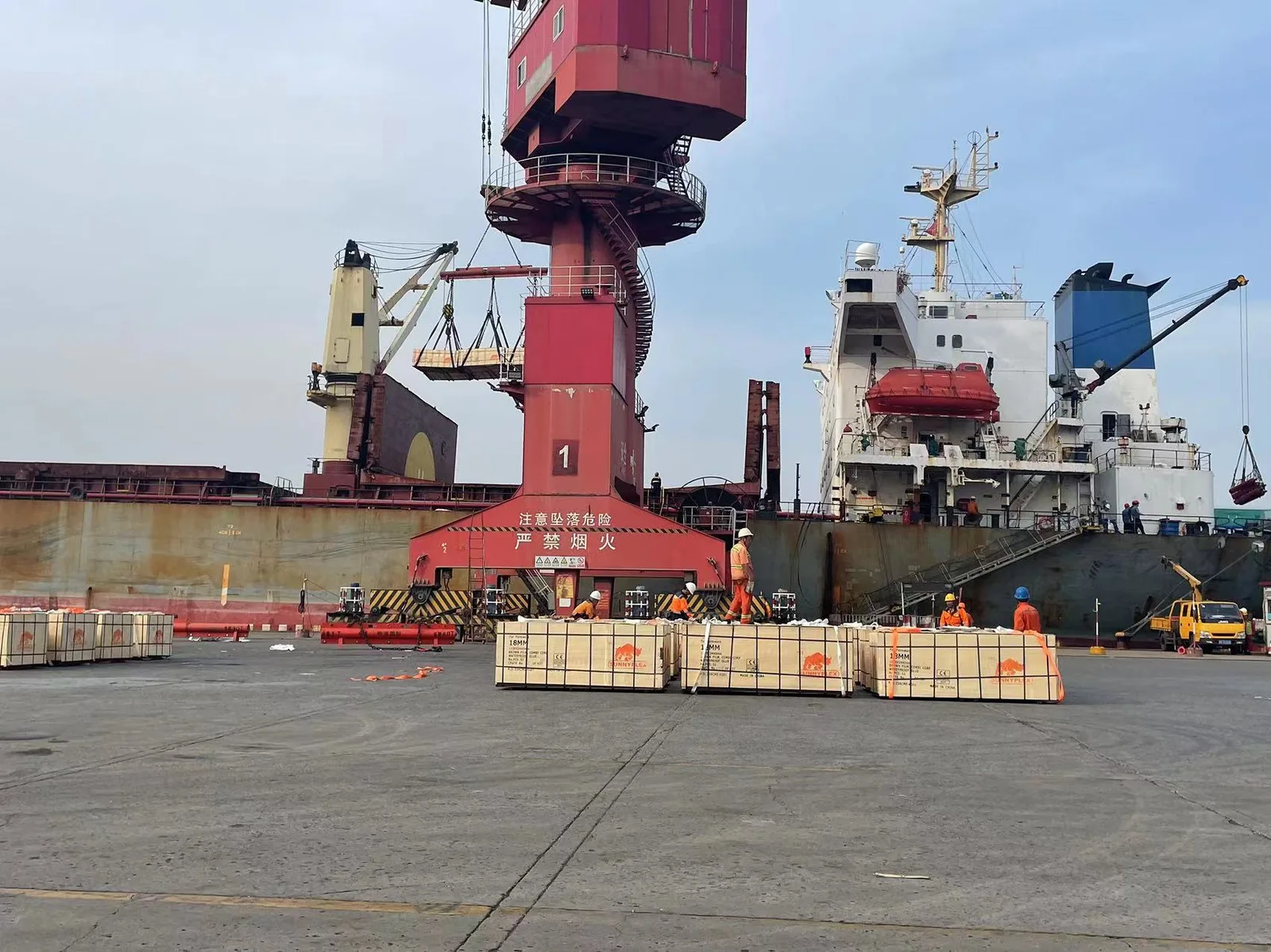
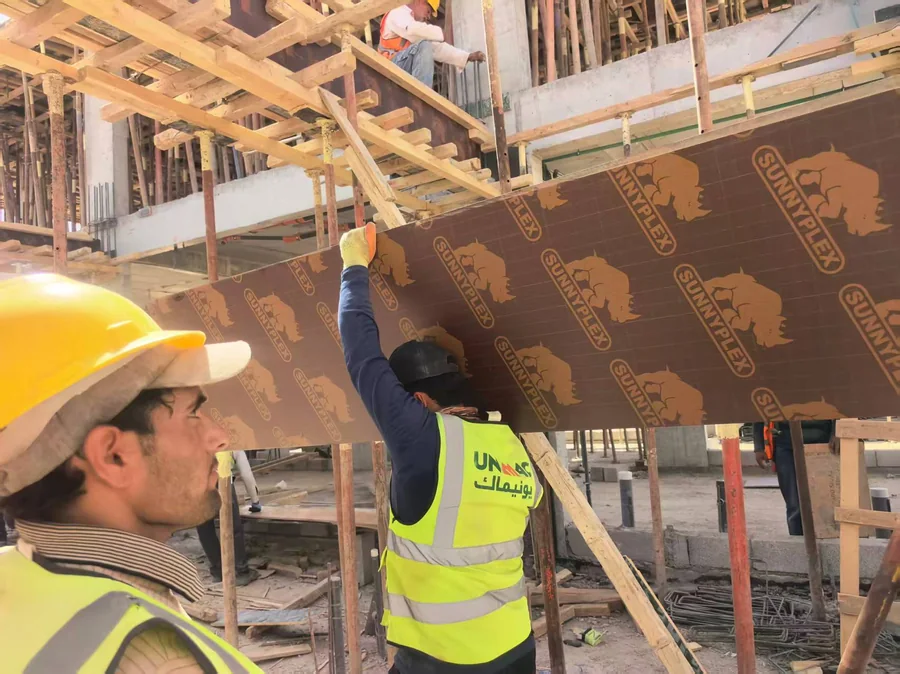
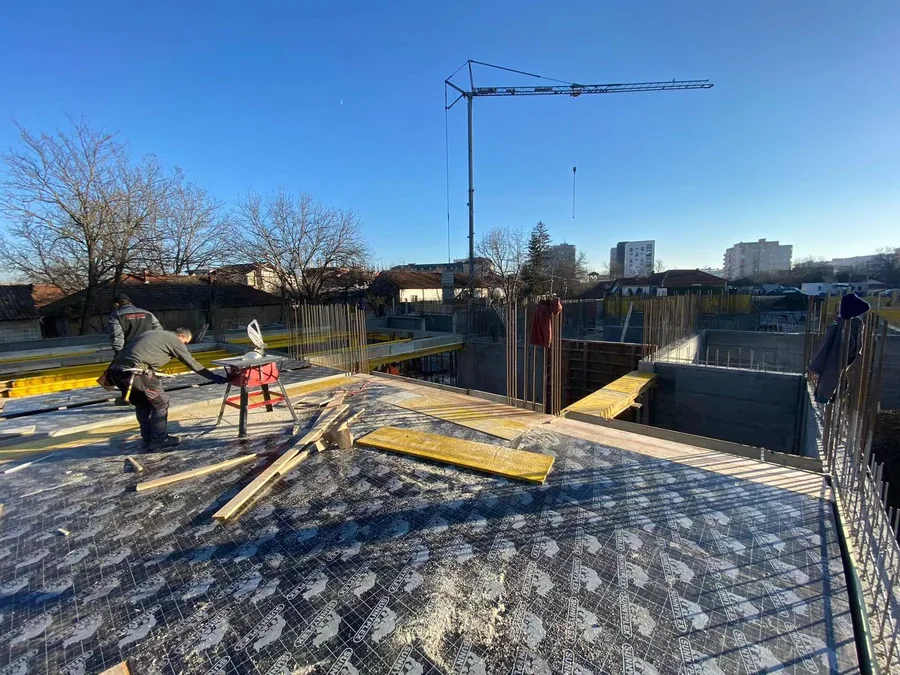
Real photos — our panels going up on customers' formwork, the deck before a pour, and the bundles craned into the hold at Lianyungang.

Get factory-direct plywood prices
Send the product, thickness, size and quantity — our export team replies with an FOB quotation, usually within one working day.