
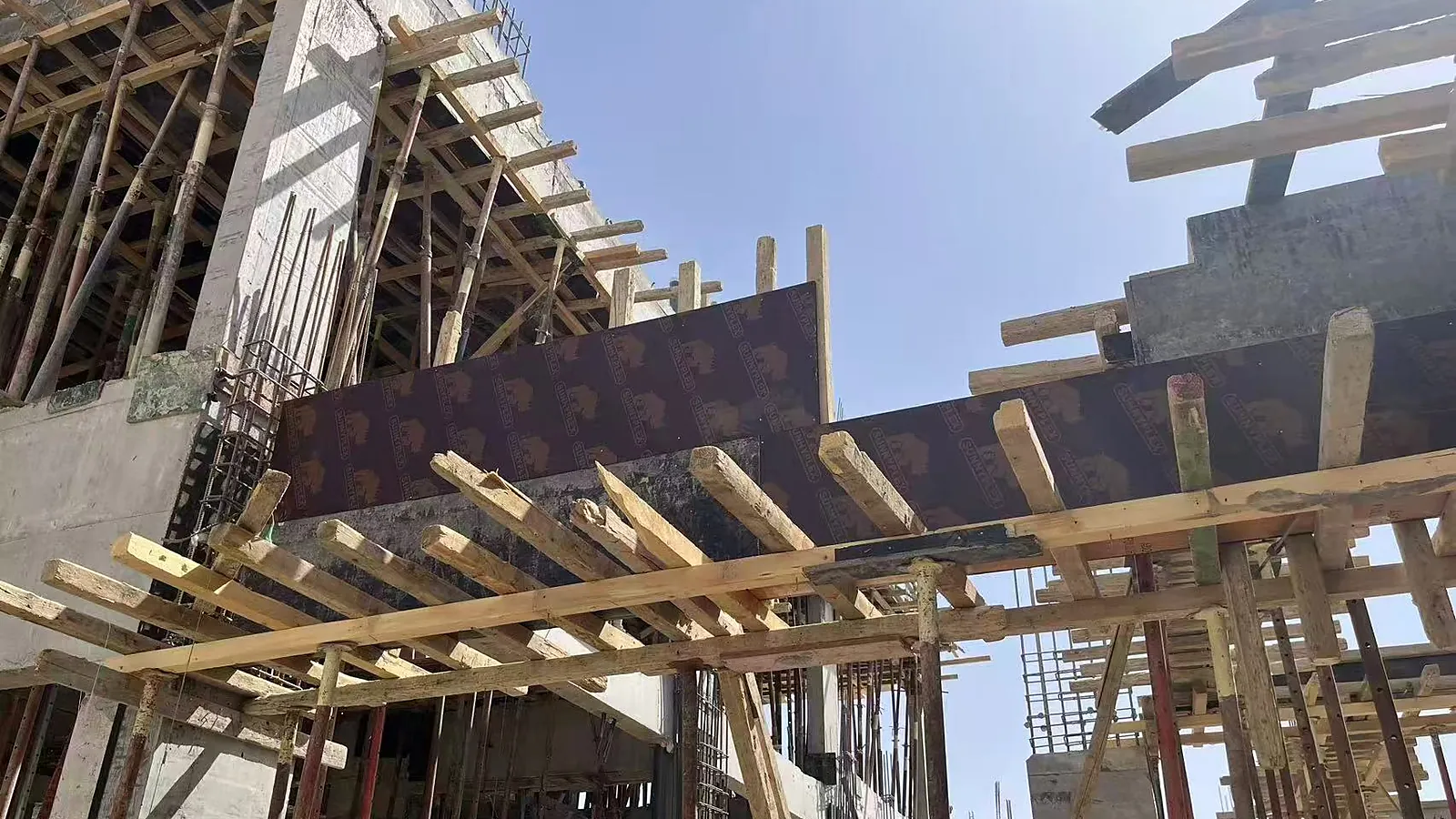
Film Faced Plywood for Turkmenistan
Brown film faced plywood in 1,220 × 2,440 mm, 16 and 18 mm, on poplar, hardwood or FJ-combi core — shipped into Turkmenistan continuously since 2011. Around 1,500 m³ a month, about thirty 40HQ containers, by rail through Khorgos or by sea through Iran. Same specification, same packing, every month.
Fifteen years, one product, one market
A buyer who reorders for fifteen years is not buying a datasheet
We sent our first film faced plywood to Turkmenistan in 2011. Fifteen years on, the same product still leaves the plant every month — the same sizes, the same three cores, the same packing, on a schedule the buyer can plan a project around.
That is the whole advantage. Plenty of suppliers can quote a 1,220 × 2,440 brown film panel. Very few have held a market through fifteen years of repeat orders, which is what makes the specification stable, the volume available and the loading dates predictable.
- One specification, not a range. 1,220 × 2,440 mm in 16 and 18 mm, brown phenolic film both faces, WBP glue — the build we actually ship, not the widest catalogue we could print.
- Volume already committed. 1,500 m³ a month sits in the press schedule as a standing allocation, so a repeat order does not queue behind spot buyers.
- Three cores on one price list. Poplar for the everyday deck, hardwood where panels are worked harder, FJ-combi where flatness matters most.
- Rail or sea, whichever clears. Block train through Khorgos, or sea from Lianyungang and in through Iran — we book the one that is moving.
- People who actually go. A visit to the market almost every year since the first container, and a stand at the Ashgabat building exhibition in 2016.
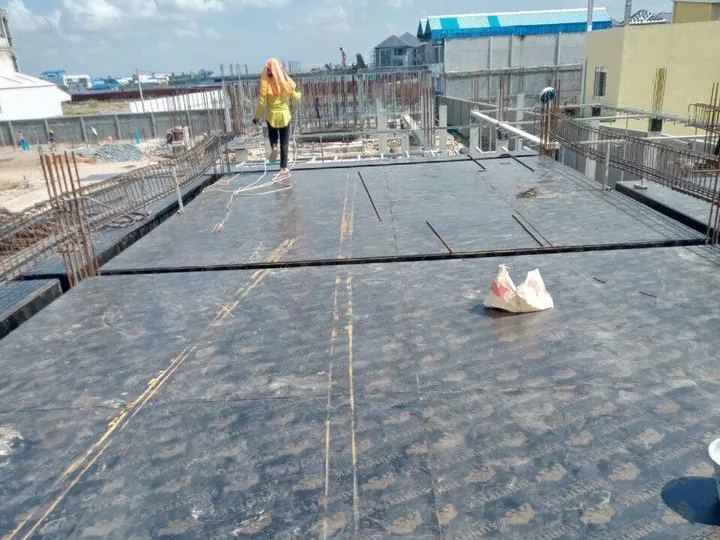
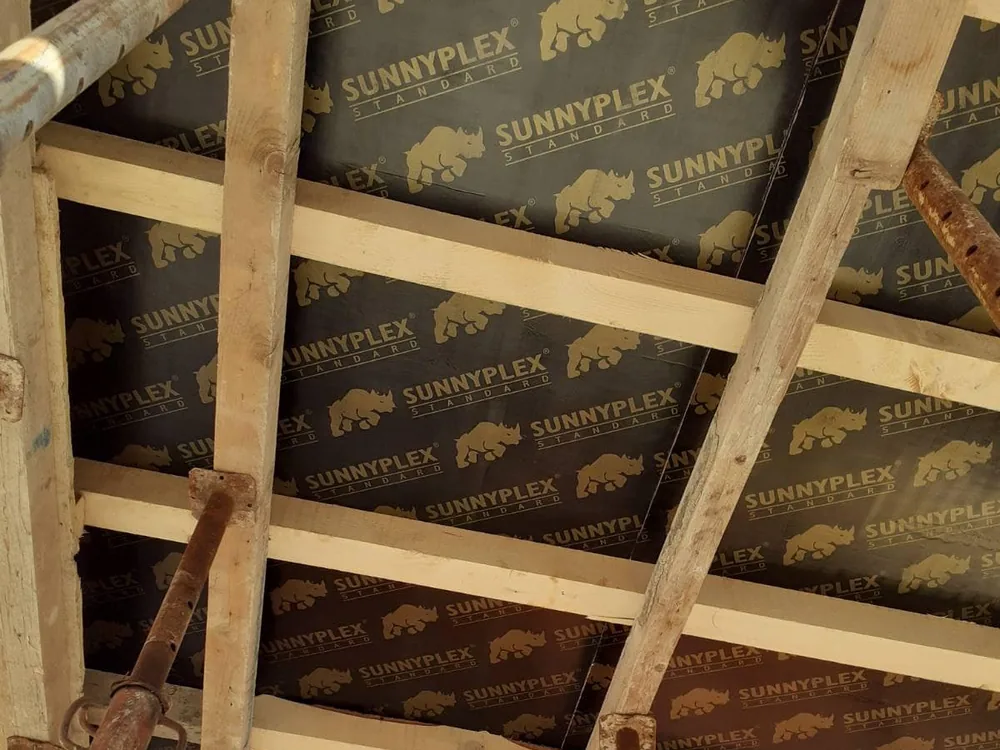
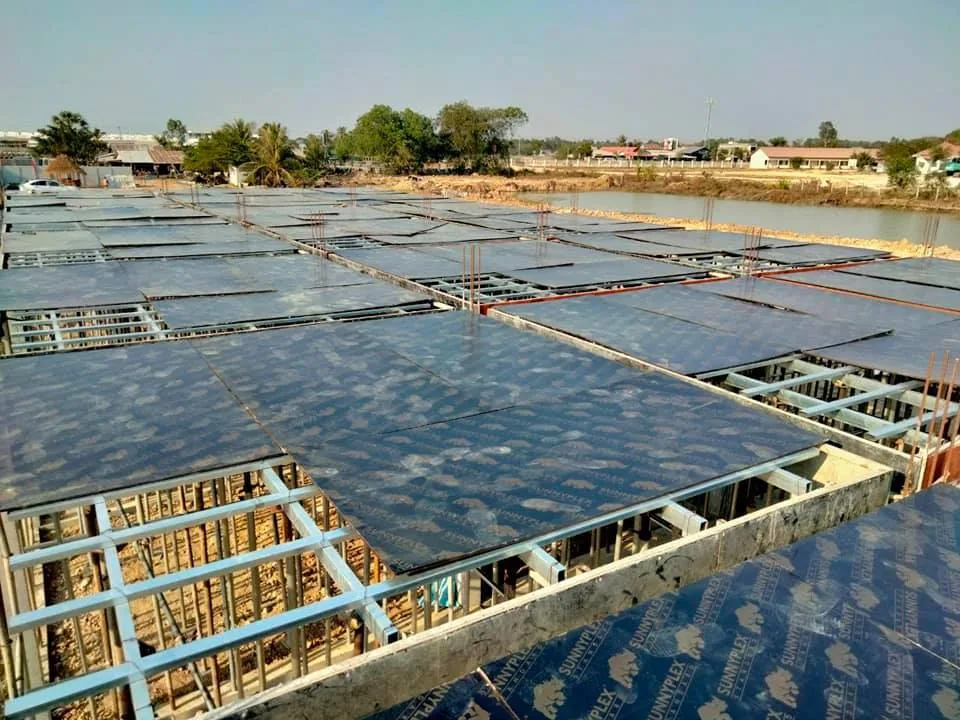 Slab deck laid with our brown film faced plywood — panels cut to the edge, joints tight, ready for reinforcement.
The panel we send
Specification, exactly as it leaves the plant
| Panel size | 1,220 × 2,440 mm |
|---|---|
| Thickness | 16 mm · 18 mm |
| Film | Brown phenolic film, both faces |
| Core | FJ / combi · poplar · hardwood |
| Glue | WBP phenolic, waterproof |
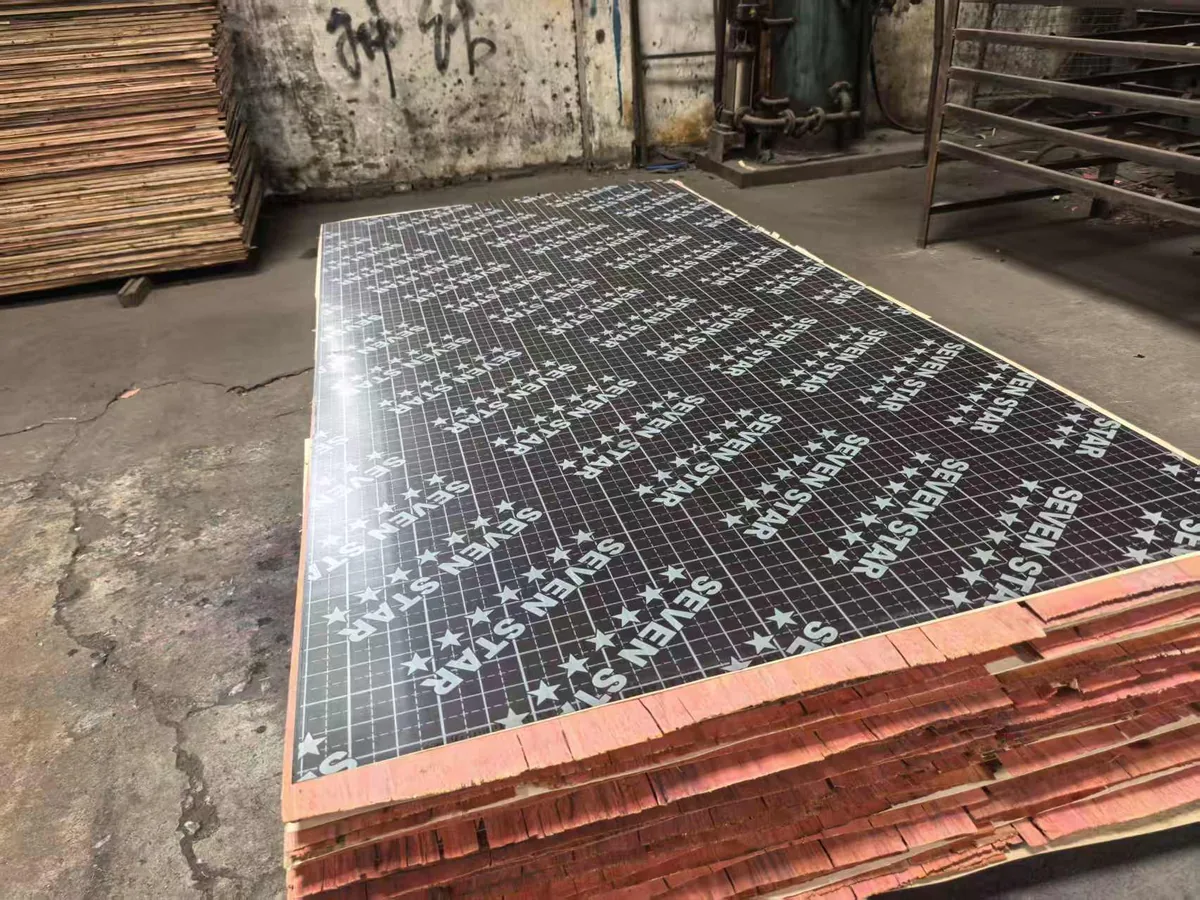
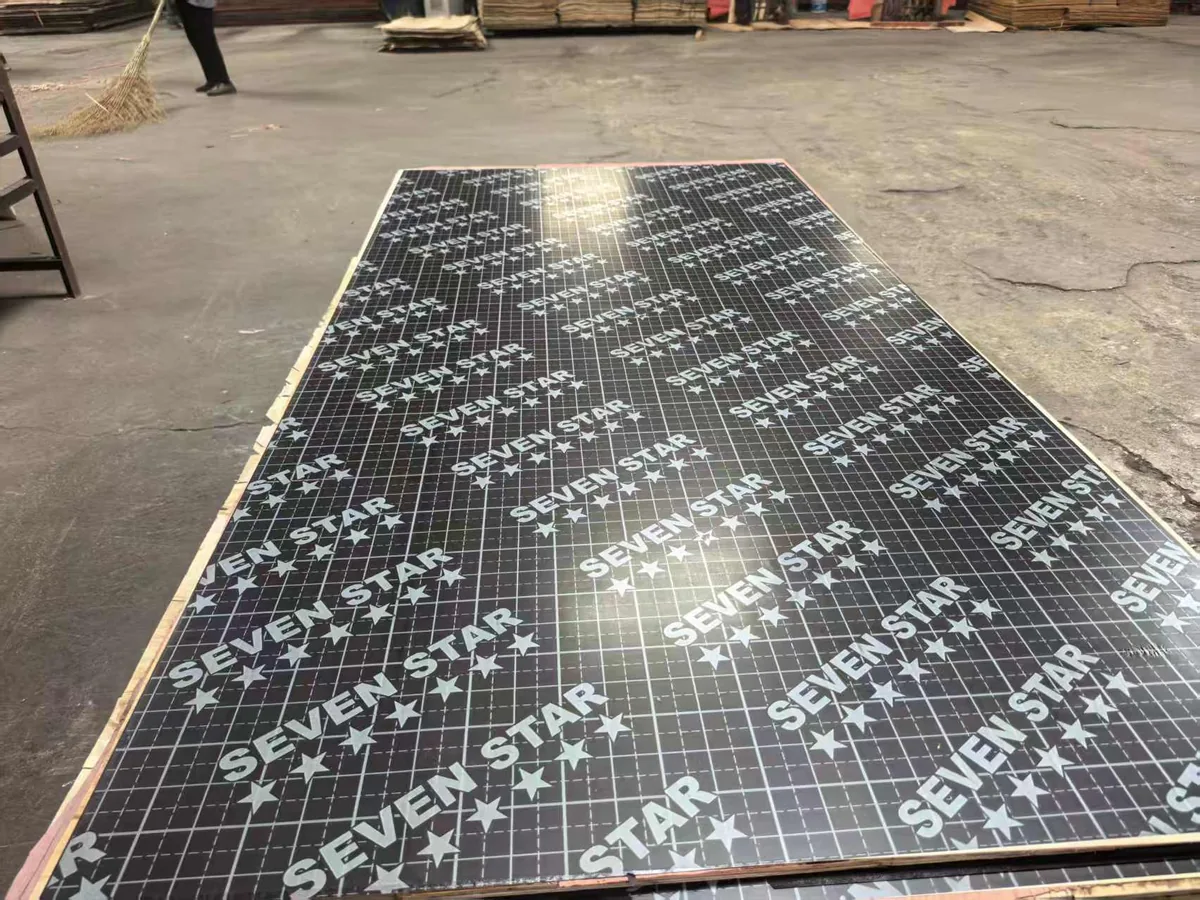
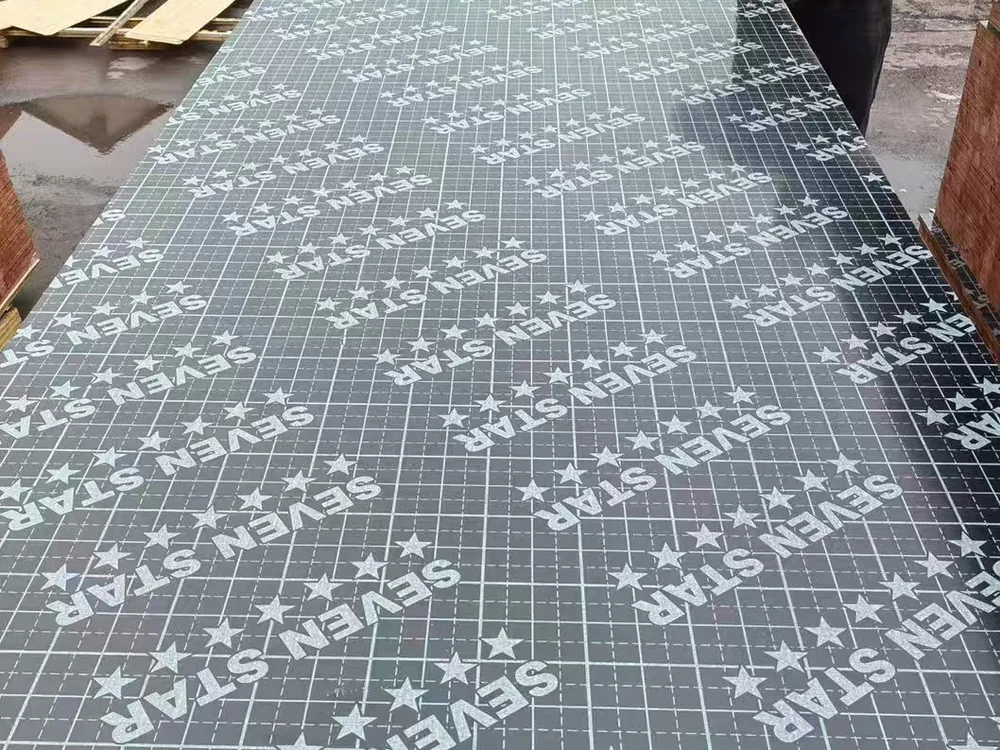
| Plain film, or the buyer’s own brand printed in | |
| Packing | Crates with edge protection and strapping |
| Loading | ≈ 50 m³ per 40HQ container |
| Minimum order | 1 × 40HQ |
| Lead time | 15 – 25 days |
Other thicknesses, 1,250 × 2,500 mm and red or black film are available on request — they are simply not what this market buys month after month.
What does not change, container after container
The film. Brown phenolic film pressed on both faces, so either side can go against the concrete and the panel can be turned after stripping.
The core. Poplar, hardwood or FJ-combi — but the same build inside a given SKU every time, so a buyer who orders “18 mm poplar” gets 18 mm poplar, not a substitute.
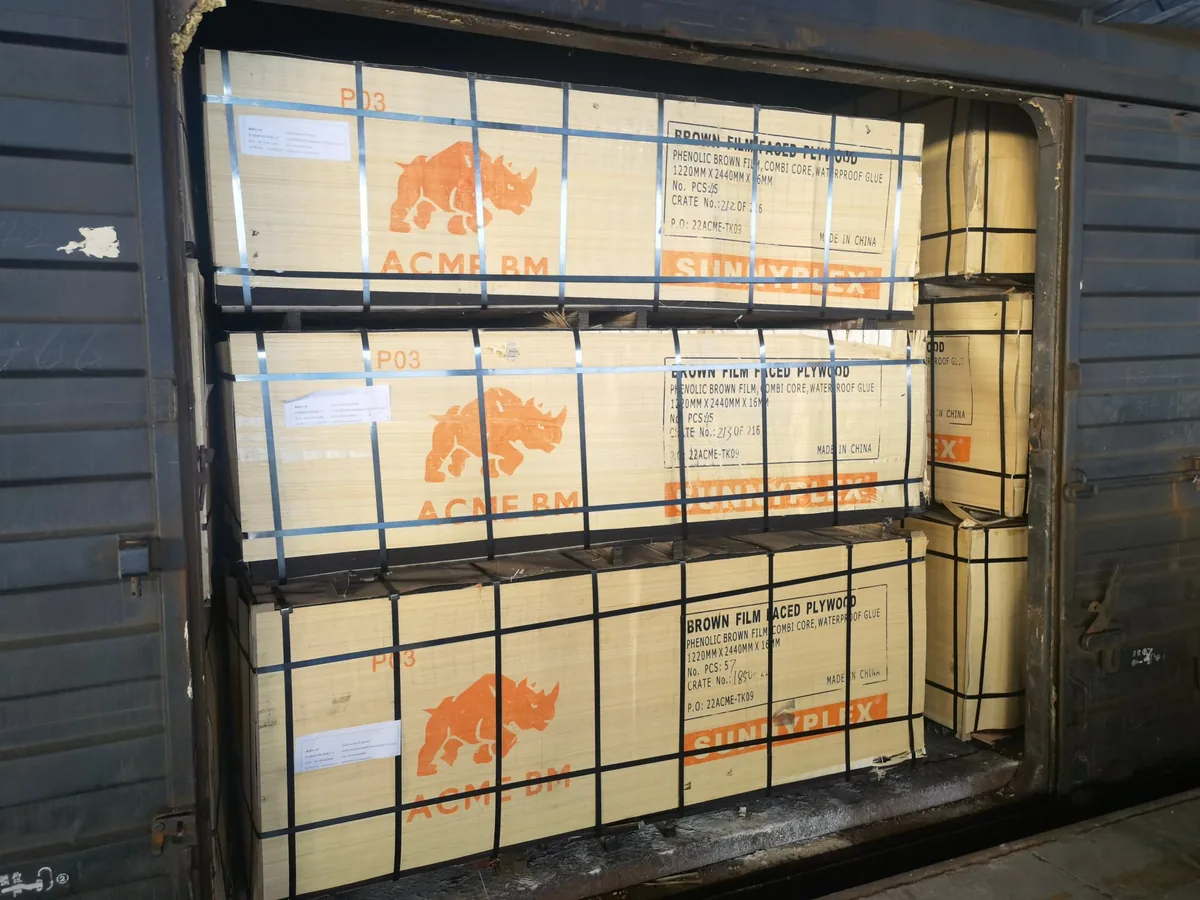
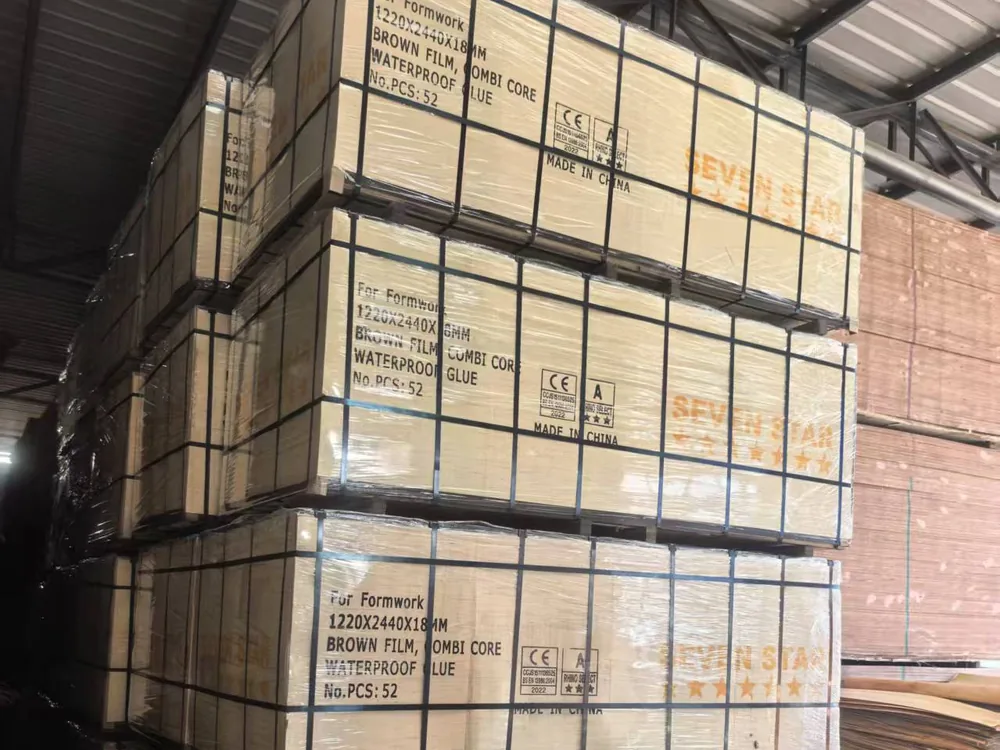
The packing. Edge protection, strapping and a stencilled crate carrying the size, core and PO — the crate in the photo below is the one that arrives on site.
The count. Roughly 50 m³ per 40HQ, loaded at the plant and sealed, so what is booked is what lands.
Three cores, and when to take which
The core is the only part of the panel a buyer cannot see. It decides weight, screw-holding and how flat the deck stays — so it is the first thing we ask about.
Poplar core
The lightest and most economical of the three. Poplar veneers press flat and keep the panel easy to handle, which is why it is the standard build for slab formwork in this market.
Best for everyday slab and beam formwork, hand stripping, projects where weight and price both matter.
Hardwood core
Denser veneers, a heavier board and noticeably better screw-holding and edge strength. Where panels are re-used hard and edges take knocks, it outlasts poplar.
Best for repeated re-use, wall and column forms, sites that strip with bars rather than air.
FJ / combi core
Finger-jointed core strips butted and glued edge to edge, combined with a mixed veneer build. Fewer overlaps mean less movement, so the board stays flat and the joints stay tight.
Best for exposed concrete, large decks, buyers who measure flatness after the pour.
From the press to the wagon
Five steps, all of them ours: the board is pressed, counted, crated and loaded by the same team that quoted it. Nothing is consolidated through a third-party warehouse.
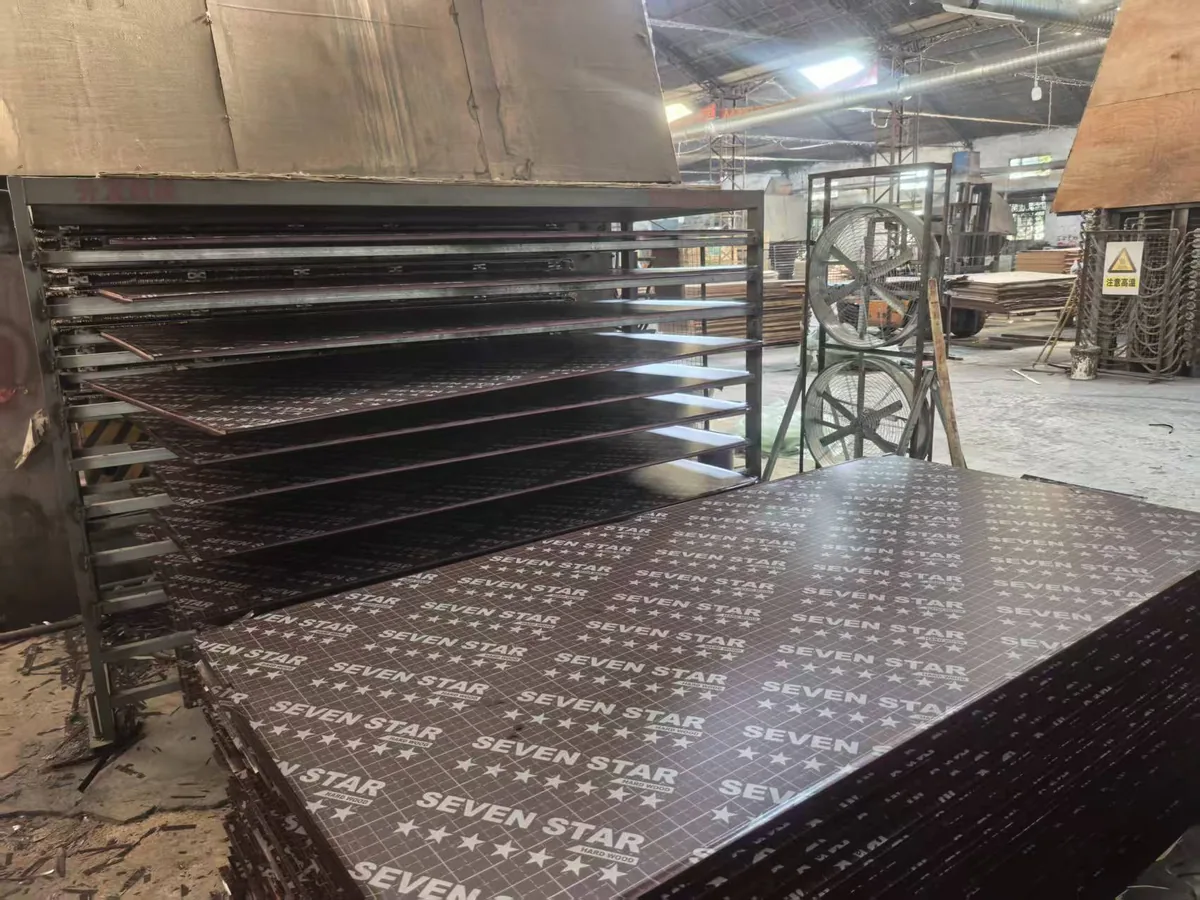 01Pressed and calibrated
Phenolic film bonded in the press, then the board is calibrated so the stack sits flat and the joints close.
 02Counted and graded
Every lot is checked and counted before it becomes a crate — the size, core and PO go on the stencil.
 03Crated and strapped
Edge protection on all four sides, strapping round the bundle, crate face printed with the specification.
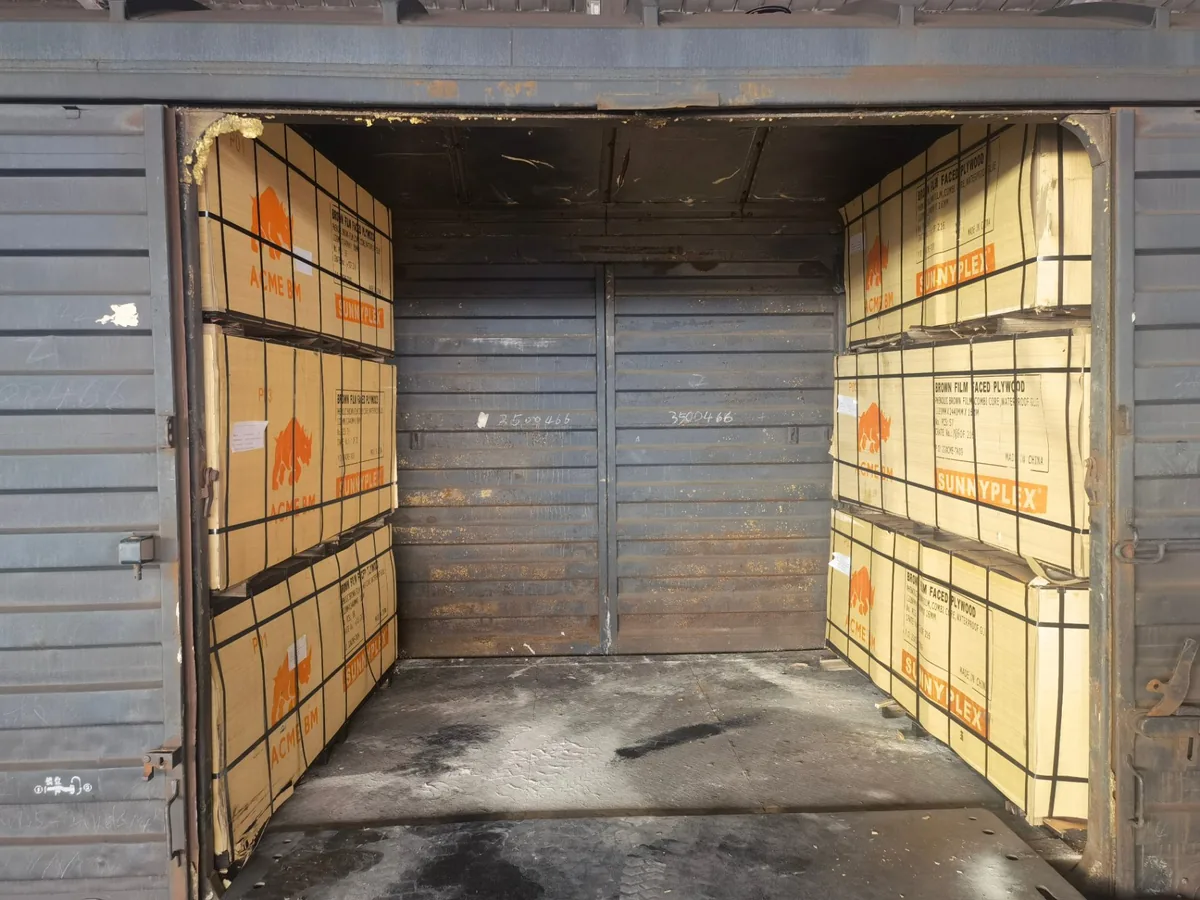
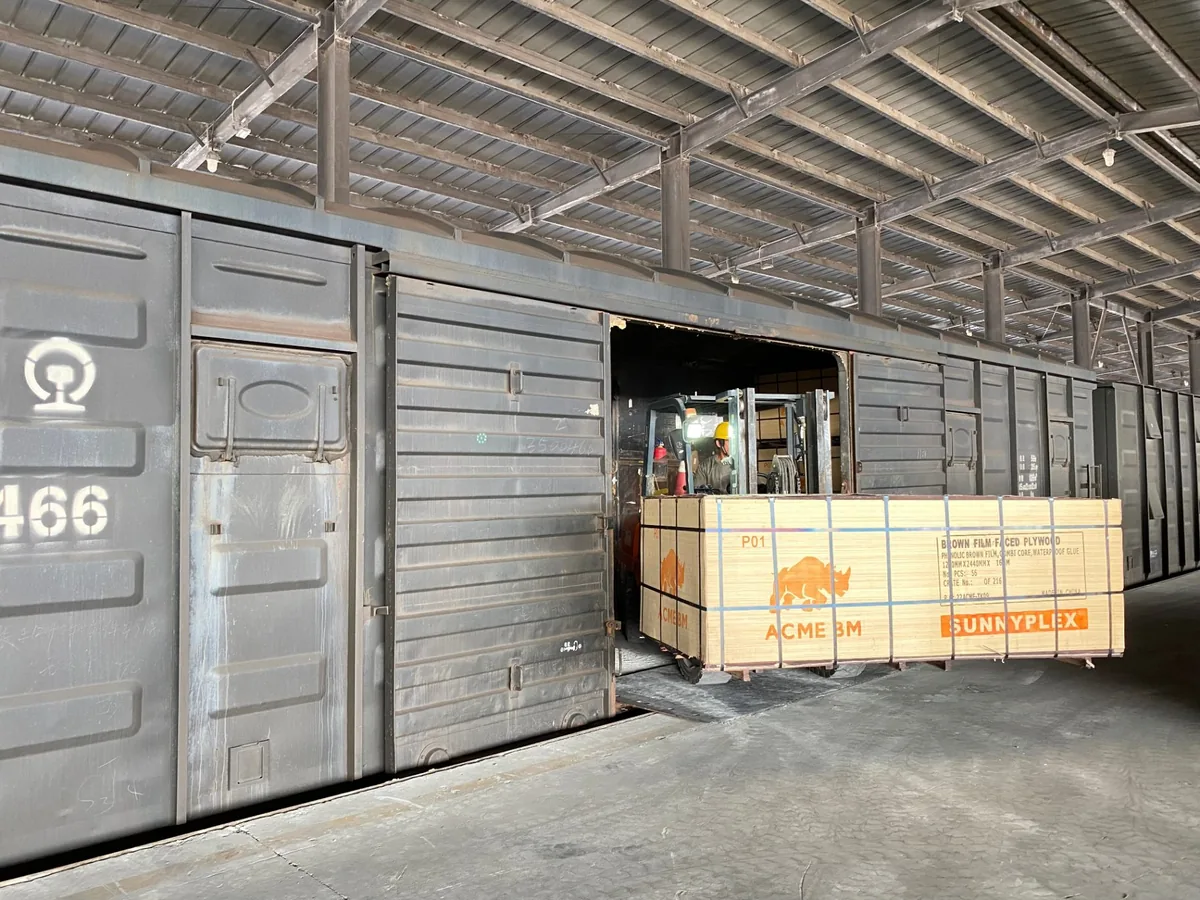 04Into the wagon
Loaded at the plant and sealed — by rail wagon to the Tongshan terminal, then on to Khorgos.
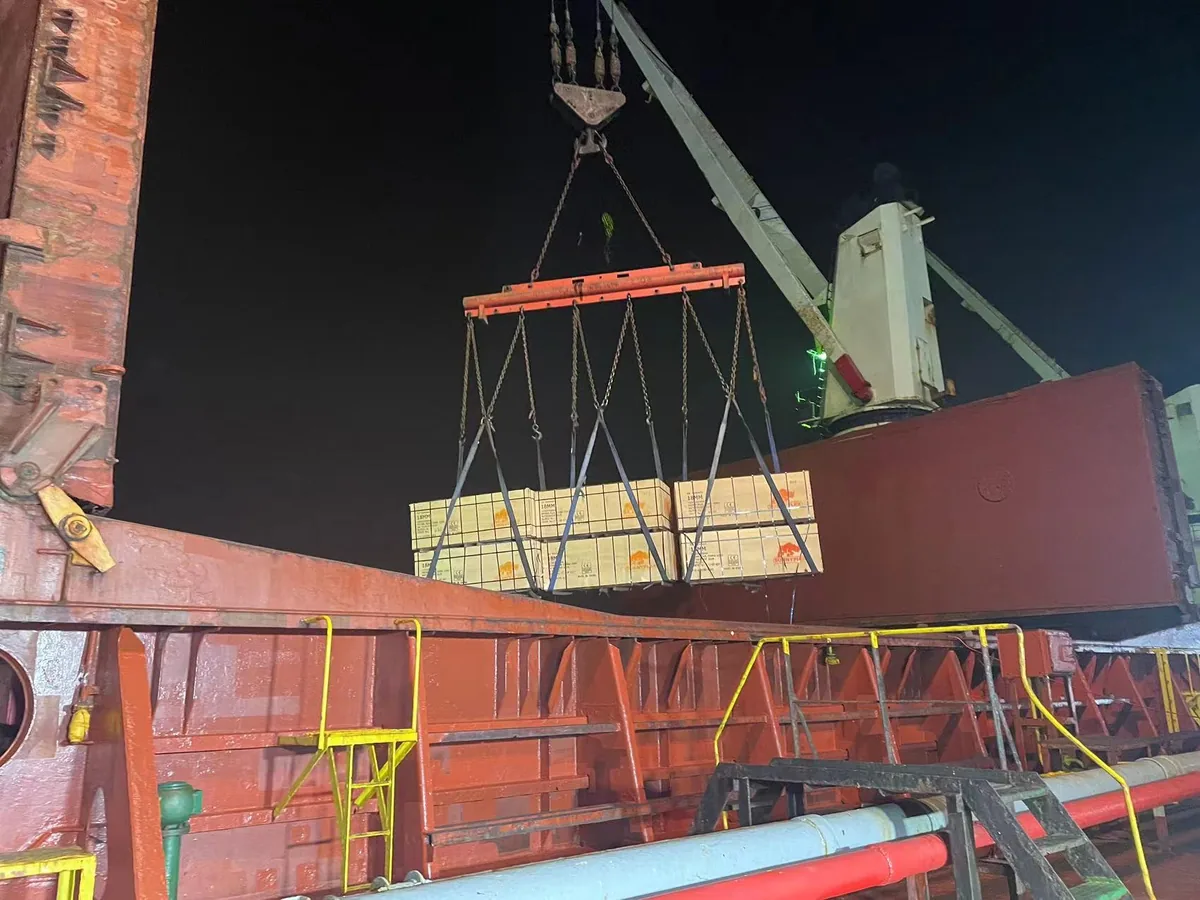 05Or into the hold
For sea freight the same crates are craned into the hold at Lianyungang, bound for Iran and on by rail.
Getting there
Two ways in, both quoted
Turkmenistan is landlocked, so the routing matters as much as the price. We ship this market both ways and book whichever one is moving at the time.
| By rail | Pizhou → Tongshan rail terminal → Khorgos / Alashankou → Kazakhstan → Uzbekistan → Turkmen border (Farap). Container or wagon, sealed at our plant. |
|---|---|
| By sea + rail | Lianyungang or Qingdao → Bandar Abbas → rail through Iran to the Turkmen border. Used when sea freight is the cheaper leg. |
| Terms | FOB Lianyungang / Qingdao. CFR and rail terms quoted per order, with the current rail plan and sailing attached. |
| One container or thirty | A single 40HQ trial order and a 30-container monthly programme go through the same booking desk. |
Rail plans and sailing dates change month to month — ask for the current schedule before you fix a site date.
Sea freight option: crates craned into the hold at Lianyungang, for Bandar Abbas and rail on to Turkmenistan.On the stand in Ashgabat
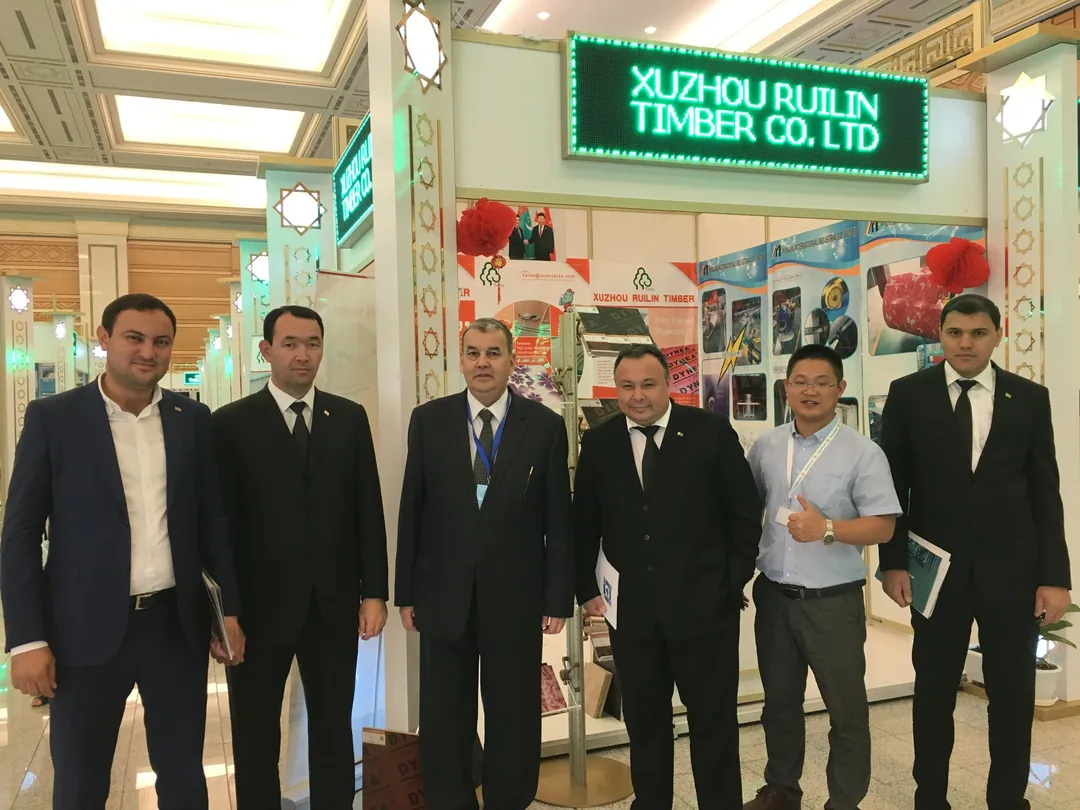
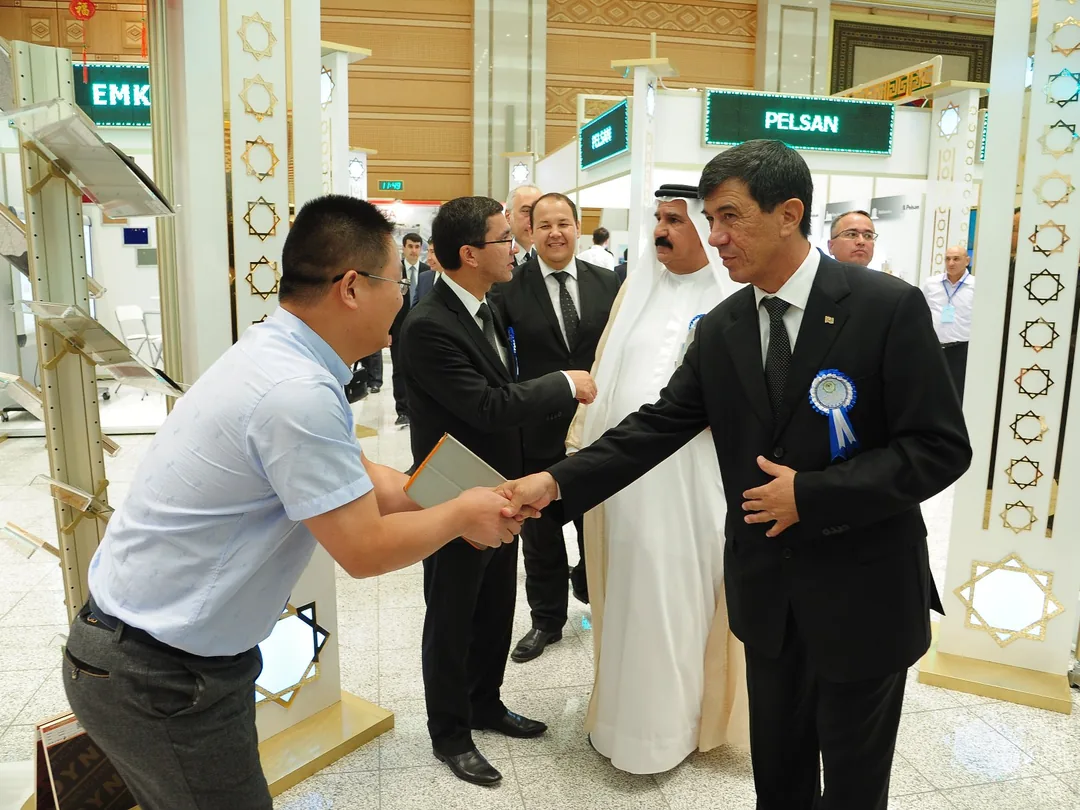
In 2016 we exhibited at TURKMENCONSTRUCTION, the international building exhibition held in Ashgabat. The organisers issued the participation diploma below, and our team was received at the fair by the then Deputy Prime Minister of Turkmenistan and by the trade counsellor of the Chinese Embassy.
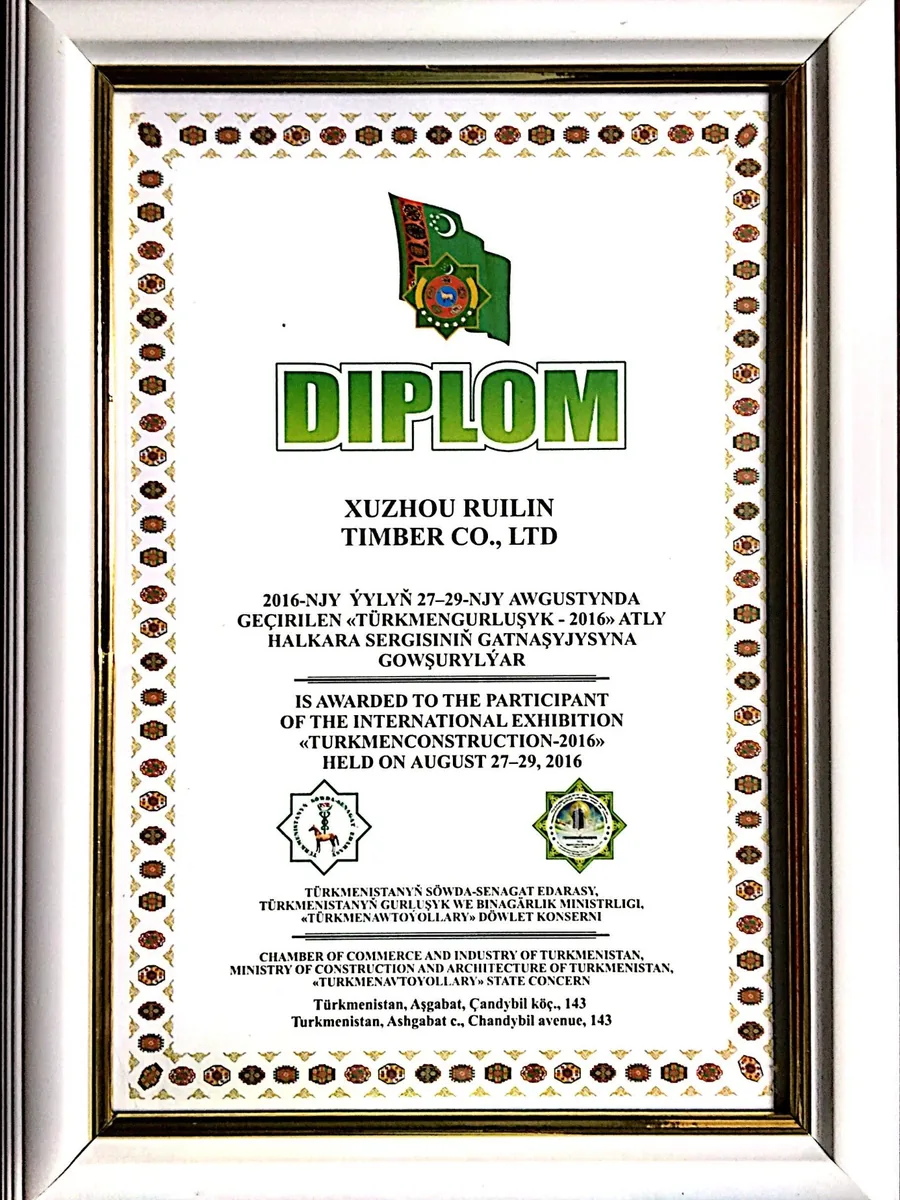
The fair was the start of it, not the end. Since 2016 we have been back to Turkmenistan almost every year — to the sites, the buyers’ yards and the rail terminal — because that is where the detail actually gets settled: which core for a wall form, how thick the crate timber should be, what the stencil has to say.
It is also how a specification stays stable. The people who buy the panels have been the same people for years, and they know what the next container will contain before it is pressed.
In use, on site, on the water
Every photo here comes from our own files — the plant, the port, the customer projects and the Ashgabat fair. No stock imagery.
Two clips from the plant
The film face and the print, and the last inspection before a bundle is strapped. Hover a clip to play it.
Straight answers
What buyers ask before the first order
If your question is not here, send it with the quantity and destination — the answer comes back with a price the same day.
Which film faced plywood do you supply to Turkmenistan?
Brown film faced plywood in 1,220 × 2,440 mm, 16 mm and 18 mm, on poplar, hardwood or FJ / combi core, bonded with WBP phenolic glue. It is the same specification we have shipped there since 2011; other thicknesses and sizes are made to order.
How much can you ship to Turkmenistan each month?
Around 1,500 m³ a month, which is roughly thirty 40HQ containers. That volume is a standing allocation for this market rather than a spot offer, so repeat orders hold their slot in the press schedule.
How long have you been supplying this market?
Since 2011, without a break. Orders have run continuously through the years since, and our team has travelled to Turkmenistan almost every year.
Which core should I choose — poplar, hardwood or FJ combi?
Poplar is the lightest and the most economical, and it is what most slab formwork in the market uses. Hardwood is denser and heavier, with better screw-holding and edge stability where panels are re-used hard. FJ / combi uses finger-jointed core strips with a mixed veneer build, which gives the flattest, most dimensionally stable board of the three.
Do the panels come by train or by sea?
Both. By rail the containers leave our yard for the Tongshan rail terminal and run through Khorgos to Kazakhstan, Uzbekistan and on to the Turkmen border. By sea they ship from Lianyungang or Qingdao and come in through Iran by rail. We quote whichever routing the buyer prefers and book it.
What is the minimum order and lead time?
One 40HQ container, with 15 – 25 days production lead time depending on thickness and core. FOB Lianyungang or Qingdao; CFR and rail terms are quoted per order.
Can you print our brand on the film?
Yes. The film can carry the buyer’s own logo, brand or specification text, and the crates can be stencilled with the PO number, size and core. Printing has been part of almost every Turkmen order we have run.
What to send for a quote
- Thickness — 16 mm or 18 mm
- Core — poplar, hardwood or FJ / combi
- Quantity — number of 40HQ
- Route — rail or sea
- Destination — site or warehouse
Send those five lines and you get an FOB price, the rail or sailing plan, and the packing detail in one reply.
Send the five linesOr WhatsApp +86-13305214888 — the export desk answers in English and Chinese.
Get factory-direct plywood prices
Send the product, thickness, size and quantity — our export team replies with an FOB quotation, usually within one working day.